Northampton · Northamptonshire
Endodontist Northampton – Root Canal Treatment You Can Feel Calm About
Angel Ognemirov, MSc Endodontics, provides root canal treatment, retreatment and urgent endodontic care to patients from Northampton and the villages around it. Every tooth is tested before anything is proposed, every canal is treated under the operating microscope, and every appointment runs at a pace that suits the person in the chair — including those who have been avoiding it for years.
Diagnosis you can trust. Treatment you can tolerate. A tooth you can keep.
- Operating microscope used for every root canal
- Diagnosis, options and fee set out in writing first
- Oral and intravenous sedation training for nervous patients
- Acute pain and swelling given priority
Call 0116 270 0550 and say your symptoms are urgent — acute pain and swelling are given priority.
Urgent root canal appointmentsEndodontics explained
What a root canal dentist in Northampton actually does
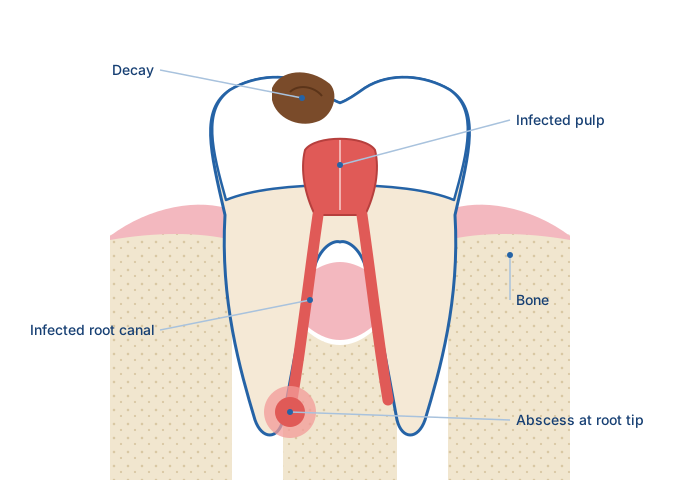
Every tooth has a living core. Nerve and blood vessels run down fine canals inside the roots, sealed off from the mouth while the tooth is intact. When decay, a crack or a knock lets bacteria in, that tissue becomes inflamed and dies, and infection travels out of the root into the jaw — producing the deep, pulsing ache that most people associate with the words "root canal" and, if nothing is done, an abscess.
Endodontics is the branch of dentistry that treats that hidden core: root canal treatment, retreatment of root fillings that have failed, apical surgery and the care of cracked and injured teeth. The procedures vary; the purpose does not — remove the disease and keep the tooth.
This is the whole of Angel Ognemirov's clinical work. Your own dentist continues to look after the rest of your mouth and restores the tooth afterwards; the inside of the tooth is treated here and handed back with a full report.
Treatments and assessments
Endodontic treatment in Northampton — the full range
A first root canal, the rescue of a tooth treated years ago, a toothache that nobody can place, a swelling that appeared overnight: every service begins by finding the cause and finishes, wherever it can, with your own tooth still in place.
Treatments
- Root canal treatmentThe infected or dying pulp is removed, the canals inside the roots are cleaned, disinfected and sealed under the microscope, and a tooth that would otherwise be lost is kept.
- Root canal retreatmentA tooth that was root-treated before can become infected again. Retreatment removes the old filling, treats the canals that were missed or re-infected and seals the tooth once more.
- Apical surgeryAn apicectomy clears infection from the tip of the root and seals it from below, for teeth whose canals cannot be reached through the crown.
- Cracked tooth diagnosisA sharp twinge on biting usually means a crack. Pinpointing it and judging its depth under magnification determines whether the tooth is protected, root-treated or removed.
- Dental injury careChipped, loosened, displaced and knocked-out teeth need swift action and patient follow-up, since the nerve in an injured tooth can fail quietly months later.
- Nervous patient careRoot canal treatment for people who dread the dentist: explained before it happens, anaesthetic proven first, a signal that stops everything and a clinician trained in dental sedation.
Symptoms, diagnosis and decisions
- Toothache investigationToothache often points to the wrong tooth. A methodical investigation finds the real cause and establishes what the tooth needs — which is sometimes nothing at all.
- Root infection and abscessAn abscess is infection that has spread from inside a dead tooth into the bone. Antibiotics only suppress it; cleaning and sealing the canals removes its source.
- Urgent root canal appointmentsThrobbing toothache, a swelling or a tooth that keeps you awake is treated as urgent. Say so when you book and the first visit is about relieving the pain.
- Tooth-saving second opinionBefore a tooth is extracted, an independent assessment of the roots, the remaining structure and the infection tells you in writing whether it can realistically be kept.
Not sure which applies to you? You do not need to know — the consultation works that out.
Why patients choose Angel
Six things you can count on
- A diagnosis, not an assumption
- Cold and bite tests and the right X-rays identify the responsible tooth before anything is proposed. If you do not need root canal treatment, that is what you will hear.
- The microscope on every tooth
- Magnification reveals the fine, curved and hidden canals that cause most root fillings to fail. It is used for every case, not saved for the difficult ones.
- Care designed for nervous patients
- Anaesthetic tested before the first instrument is picked up, a signal that stops everything and a clinician trained in oral and intravenous dental sedation.
- A plan in writing
- Diagnosis, options, realistic outlook and fee are set down after your consultation, so that you decide at home with the facts in front of you.
- Time to finish properly
- Appointments are long enough that nothing is hurried, and most root canal treatments are completed in a single visit of 60 to 90 minutes.
- Your dentist kept informed
- You stay with your own dentist for check-ups and the final restoration. They receive a report and X-rays so that nothing falls through the gap.
The process
From booking to a tooth you can forget about
Book
Online in a minute or by telephone. Say whether you are in pain, whether your dentist has seen the tooth and whether recent X-rays exist.
Consultation
Your history, an examination, cold and bite tests and the X-rays that are needed. You leave with a written diagnosis, plan and fee — or confirmation that no treatment is required.
Treatment
Under local anaesthetic, with the tooth isolated, every canal is measured, cleaned, disinfected and sealed under the microscope — usually in one visit.
Restore and review
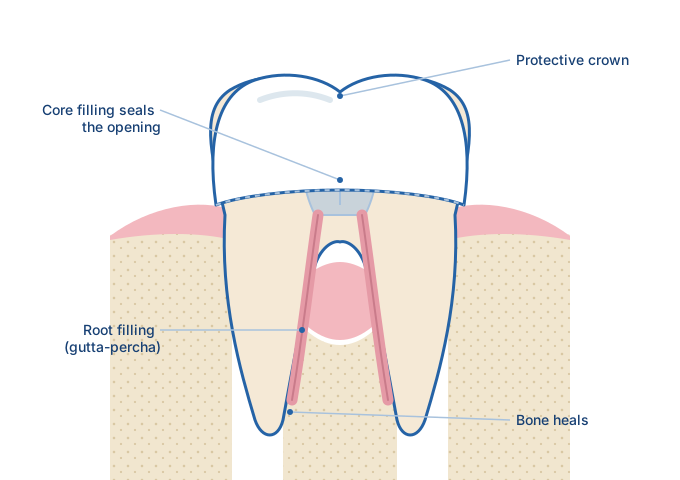
Your dentist fits the protective crown or filling. Healing is confirmed on a later X-ray and your dentist receives a full report.
What the treatment achieves
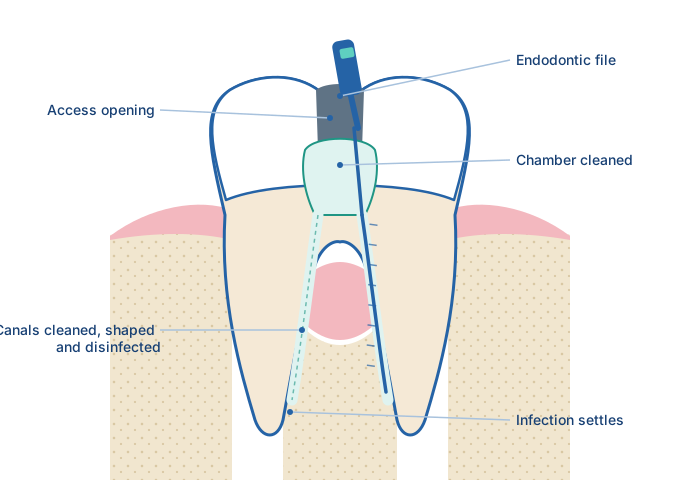
The illustration shows the stage most patients never see: the fine instrument working inside the canal, cleaning and shaping it to the full length of the root. Done under magnification, this is what turns a painful, infected tooth into one that can be sealed, restored and kept.
Nervous patient care
Avoiding the dentist? You will not be the first, and you will be looked after
Many people live with a toothache for months because the treatment frightens them more than the pain does. The fear usually dates from one bad experience years ago, and "root canal" is the phrase that brings it back. Angel treats nervous patients deliberately, and counts it among the most rewarding parts of his work.
You will be told what is going to happen before it happens. The anaesthetic is tested before treatment begins. You agree a signal that stops everything the moment you use it, and the appointment is booked with enough time that nothing is rushed. Because Angel has completed training in oral and intravenous dental sedation at Guy's Hospital in London, sedation can be discussed at your consultation where it would help.
Say you are nervous when you book. You stay in charge of the appointment from start to finish.

About me
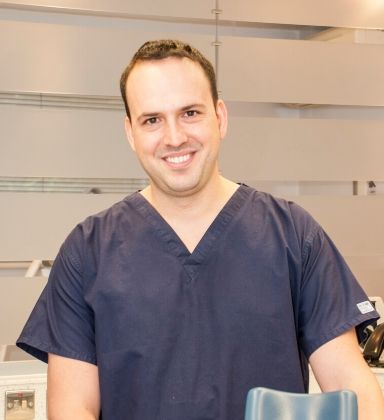
Who will treat you: Angel Ognemirov
MSc Endodontics, University of Chester
Angel Ognemirov holds an MSc degree in Endodontics from the University of Chester. He has completed training in oral and intravenous dental sedation at Guy's Hospital in London.
Angel focuses on providing high-quality endodontic care, particularly for patients who experience dental anxiety. His patient-centred approach combines modern endodontic techniques with a calm and supportive treatment experience.
He also holds a certificate in Restorative Dentistry and is an active member of the Society for the Advancement of Anaesthesia in Dentistry (SAAD).
Angel sees patients from across Northampton — Kingsthorpe, Duston, Upton, Wootton, Hardingstone, Weston Favell, Billing, Collingtree and Grange Park — and from Moulton, Boughton, Earls Barton and the villages beyond, whether referred by their dentist or booking directly.
- MSc in Endodontics, University of Chester
- Training in oral and intravenous dental sedation, Guy's Hospital, London
- Certificate in Restorative Dentistry
- Member of the Society for the Advancement of Anaesthesia in Dentistry (SAAD)
Precision
The microscope is why root fillings here are built to last
A root canal may be finer than a hair, bend sharply and split without warning, and a molar often has one more canal than first appears. Root fillings fail for specific, avoidable reasons: a canal that was missed, a filling that stops short, a seal that leaks.
Working under an operating microscope answers each of them. Magnification and direct light show the floor of the tooth clearly, so canals are found rather than hunted for; electronic measurement fixes the length of each root; flexible nickel-titanium instruments follow the canal's natural curve; and activated disinfectant reaches the fine branches no instrument can.
No clinician can guarantee a result, and none will be promised. What this standard of care does is give your tooth the best realistic chance of healing and lasting.
Equipment serves judgement. A sound diagnosis and an honest view of the tooth's prospects come first; precision then carries out the plan.
Emergency root canal treatment
Toothache at 2am is a message, not a nuisance
Pain that begins on its own, lingers after a hot drink or pulses at night means the nerve is inflamed or has died. Painkillers blunt it for a few hours; they do not cure it, and an infection left alone can spread.
Book and say that your symptoms are urgent. You will be seen as promptly as possible, the pain relieved first and the remaining treatment planned for a time that suits you.
Seek medical help immediately if a swelling is spreading quickly, you have difficulty swallowing or breathing, or you feel very unwell: NHS 111 or A&E.
Keeping natural teeth
Ask before you lose a tooth
Your own tooth is held by a ligament that senses how hard you bite and keeps the bone around it alive. It needs no surgery to install, costs less over a lifetime than any replacement and, once properly treated and restored, can last for decades.
An infected tooth, a failed root filling or a canal that defeated someone else is not, in itself, a reason to lose the tooth. Each case is judged on its merits and you receive a written view of the realistic options and their likely success.
When extraction genuinely is the right course, you will be told so plainly and your dentist helped to plan the replacement. When the tooth can be kept, you will be shown how.
Common questions
What patients in Northampton ask before root canal treatment
Direct answers to the questions that come up most. The patient guides go further.
Will root canal treatment hurt?
Not when the tooth is properly numbed — and it is tested before anything begins. You feel pressure, vibration and water, not pain; if anything sharp breaks through, more anaesthetic is given immediately. A few days of tenderness afterwards is normal and settles with ordinary painkillers.
I'm frightened of the dentist. Can you still treat me?
Yes — it is a particular interest of Angel's. Every step is explained before it happens, the anaesthetic is checked first, you can stop the appointment with a signal and nothing is rushed. He has also completed training in oral and intravenous dental sedation, so sedation can be discussed where it would help. See nervous patient care.
How long is the appointment?
Usually 60 to 90 minutes, and most teeth are finished in one visit. A heavily infected tooth, a retreatment or unusual anatomy may need a second appointment.
Do I need to be referred?
No. Many patients book directly. If your dentist has already seen the tooth, tell us what they found and they will receive a report after your visit.
Is it really better to keep the tooth than have an implant?
Usually, yes. Your own tooth keeps the ligament and bone around it healthy, needs no surgery to place and generally costs less over a lifetime than an implant or bridge. Replacement is right only when a tooth genuinely cannot be restored — and you will be told honestly if that applies.
The tooth already has a root filling. What now?
Usually retreatment: the old root filling is removed, missed or re-infected canals are cleaned and the tooth is sealed again. Where the canal cannot be reached from above, apical surgery treats the root tip directly. Only a split root or too little remaining tooth means extraction.
Can't antibiotics clear it?
They may calm a swelling for a while, but they cannot reach bacteria sealed inside a dead tooth, so the infection returns when the course ends. Only treating the canal system removes the cause.
Why is the microscope used?
Root canals are narrow, curved and often hidden. Magnification and direct light allow every canal to be found, cleaned to its full length and sealed — which is what makes the treatment last. A missed canal is the most common reason a root filling fails.
Will I need a crown afterwards?
Back teeth almost always do, because a root-treated molar without a crown is prone to cracking. Some front teeth can be restored with a filling. Your own dentist fits it, guided by the report sent after treatment.
Can I have root canal treatment while pregnant?
In most cases, yes — treating an infected tooth is better for you and the baby than leaving it. Local anaesthetic is safe, imaging is kept to a minimum and timing is planned with you. Tell us when you book; the guide root canal treatment and pregnancy has more detail.
What does it cost?
It depends on the tooth and the complexity of the treatment, so the fee is confirmed in writing after your consultation and before treatment starts. It does not change part-way through.
Which areas do you cover?
Patients come from across Northampton — Kingsthorpe, Duston, Upton, Wootton, Hardingstone, Weston Favell, Billing, Collingtree, Grange Park — and from Moulton, Boughton, Earls Barton and further afield in Northamptonshire. You do not need to live locally.
How do I book?
Use the "Book an Appointment" button to book online, or telephone 0116 270 0550. Mention whether you are in pain, whether your dentist has seen the tooth and whether recent X-rays exist. The contact page has the rest.
Book an Appointment
Arrange root canal treatment in Northampton
Book online in a minute, whenever it suits you. If you would rather talk, telephone and a person will find the earliest suitable appointment — and prioritise you if you are in pain.
In severe pain or have a swelling? Say so when you book and you will be seen sooner.
Helpful to have ready
- Which tooth or side hurts, and for how long
- Whether your dentist has seen it, and any recent X-rays
- A list of your medicines and medical conditions
- Anything that would make the visit easier — including that you are nervous